Septarian Slab
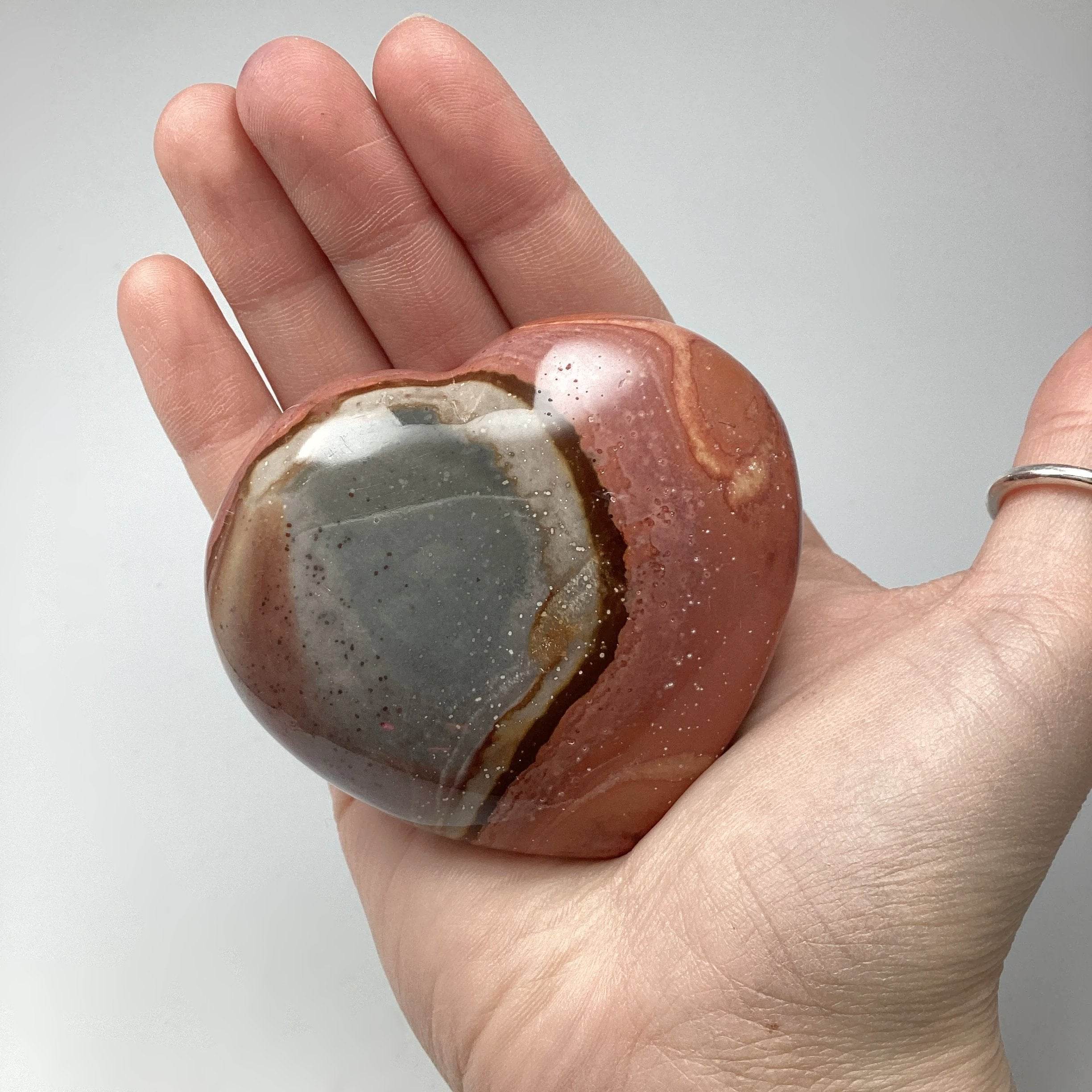
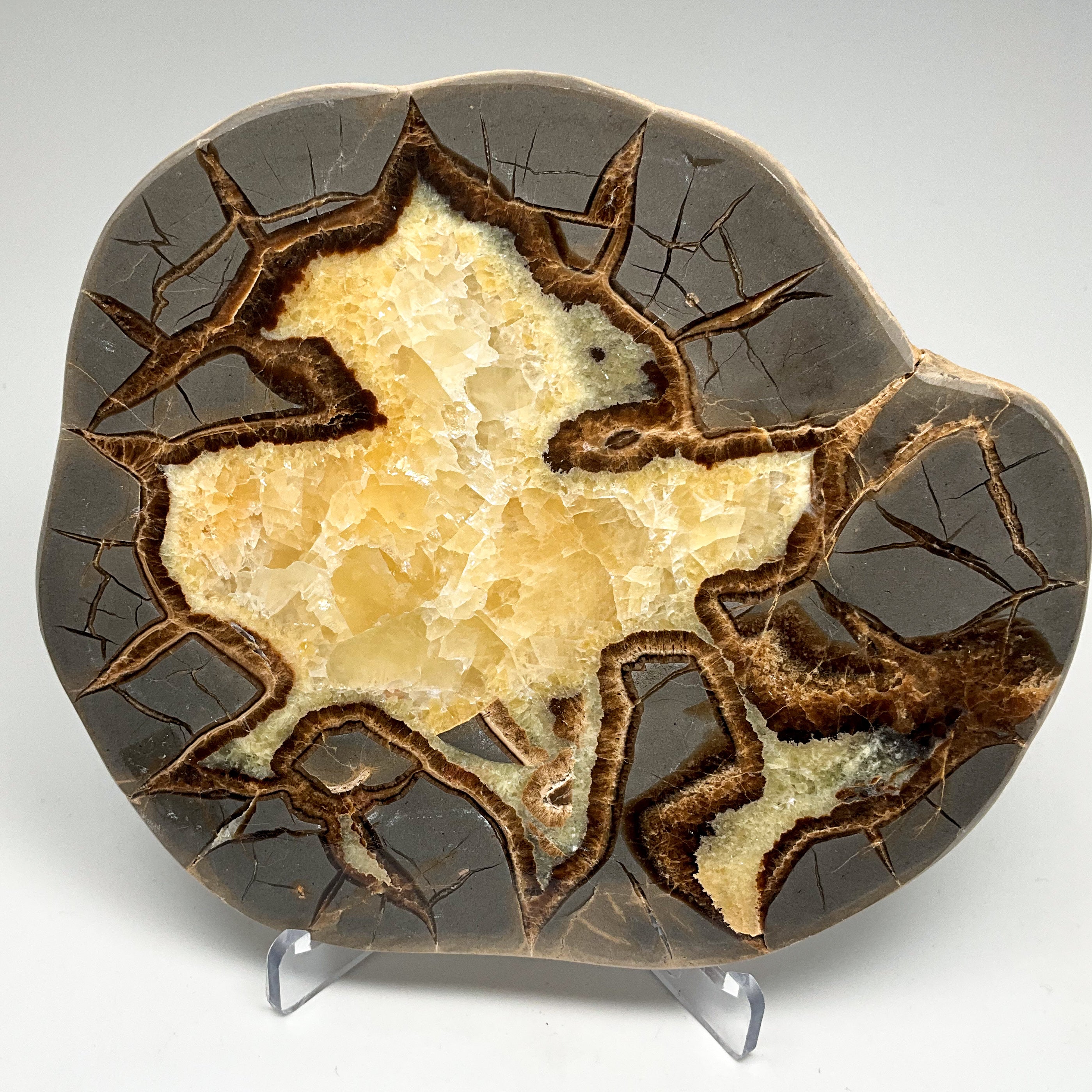
These unusual rock formations are called septarians. A septarian is a mud concretion that formed on an ancient seabed or floor. These nodules or concretions were formed 50 million to 70 million years ago. In very rare instances fossil remains of various ocean floor dwellers may be found inside the septarian. Theories vary as to what caused the crystals to form inside. Scientists do agree that the process of formation is very unusual and complex.
Septarians usually have a pattern of jagged veins on the inside. The different minerals that make up the septarian include yellow calcite, brown aragonite, white or clear barite with grey rock called limestone forming the nodule. The septarian may be solid or it may contain a hollow cavity that is filled with calcite crystals. The hollow septarians are sometimes called septarian geodes.
A lot of work goes into digging septarians, as well as into cutting, polishing, and preparing the pieces for display.
These unusual rock formations are called septarians. A septarian is a mud concretion that formed on an ancient seabed or floor. These nodules or concretions were formed 50 million to 70 million years ago. In very rare instances fossil remains of various ocean floor dwellers may be found inside the septarian. Theories vary as to what caused the crystals to form inside. Scientists do agree that the process of formation is very unusual and complex.
Septarians usually have a pattern of jagged veins on the inside. The different minerals that make up the septarian include yellow calcite, brown aragonite, white or clear barite with grey rock called limestone forming the nodule. The septarian may be solid or it may contain a hollow cavity that is filled with calcite crystals. The hollow septarians are sometimes called septarian geodes.
A lot of work goes into digging septarians, as well as into cutting, polishing, and preparing the pieces for display.
Description
These unusual rock formations are called septarians. A septarian is a mud concretion that formed on an ancient seabed or floor. These nodules or concretions were formed 50 million to 70 million years ago. In very rare instances fossil remains of various ocean floor dwellers may be found inside the septarian. Theories vary as to what caused the crystals to form inside. Scientists do agree that the process of formation is very unusual and complex.
Septarians usually have a pattern of jagged veins on the inside. The different minerals that make up the septarian include yellow calcite, brown aragonite, white or clear barite with grey rock called limestone forming the nodule. The septarian may be solid or it may contain a hollow cavity that is filled with calcite crystals. The hollow septarians are sometimes called septarian geodes.
A lot of work goes into digging septarians, as well as into cutting, polishing, and preparing the pieces for display.